Spoilt for choice
Industry experts discuss how to choose the right rootstock for your stone-fruit orchard. By Anna Mouton
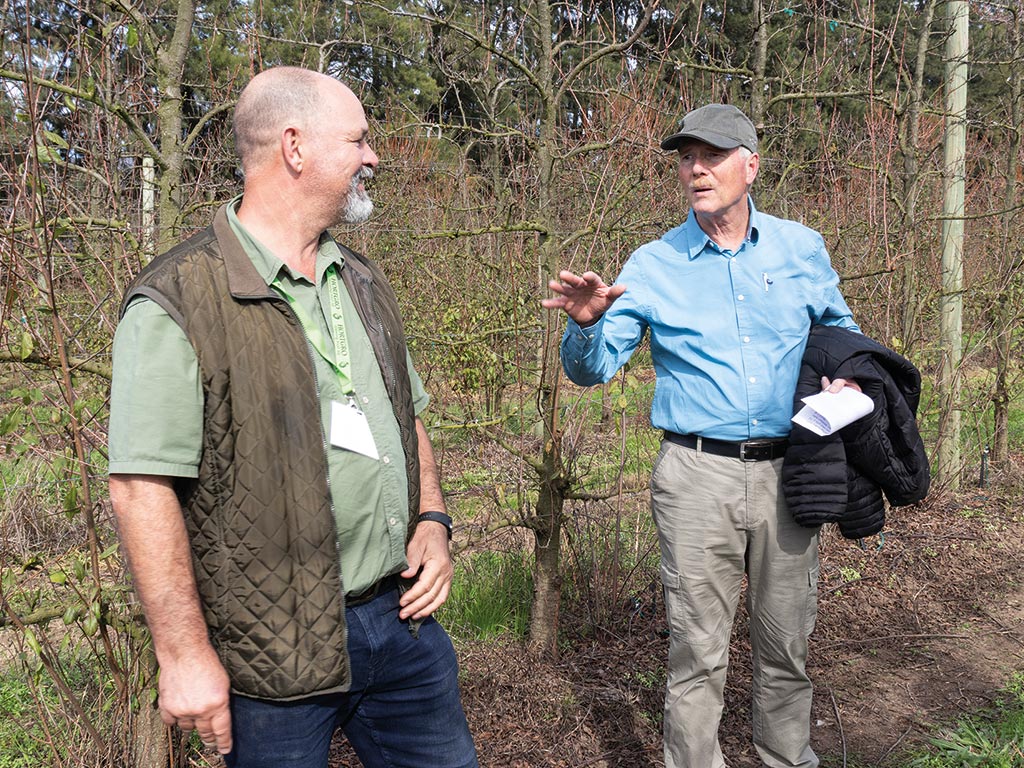
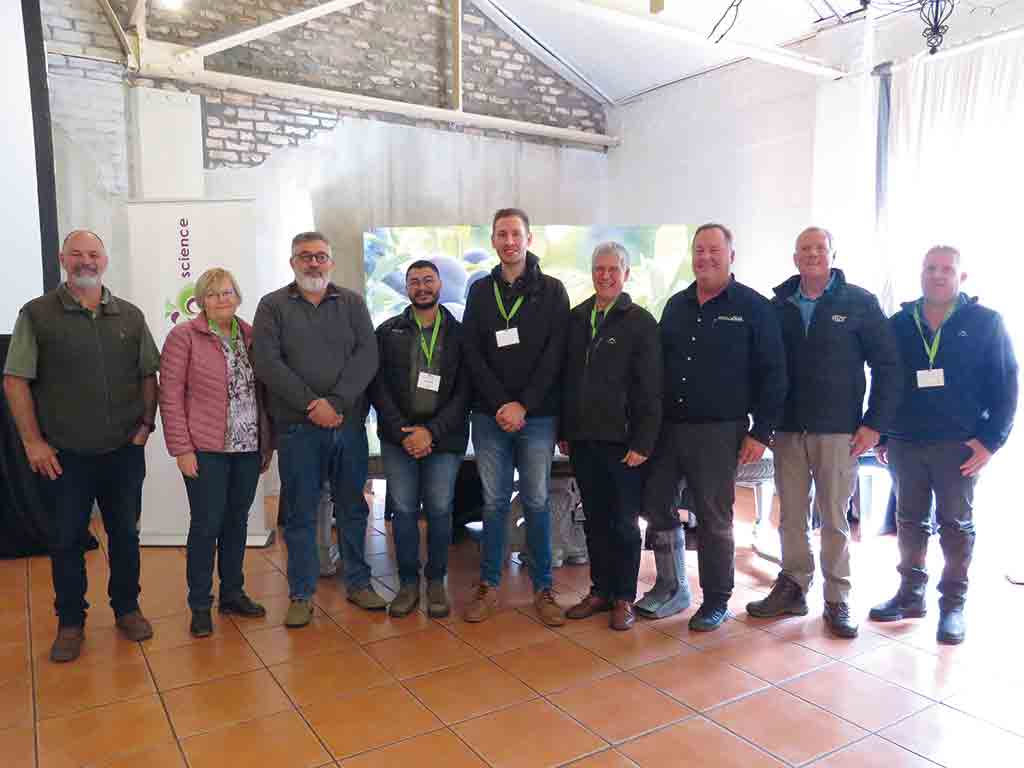
The 2026 Hortgro Stone-fruit Seminar and Orchard Walk included a panel discussion on rootstock selection. Chairing the panel was Marno van der Westhuizen, Crop Production Programme Manager at Hortgro Science. It included Andrew Hacking of Ad Lucem Agricultural Services, Charl Stander of Freshness First, Frederik Voigt of ZZ2, and Douw Willemse of Allée Bleue.
If you missed the event, you can read an edited version of the discussion below, including some insights shared by the audience.
Key considerations
Van der Westhuizen
Rootstocks play a critical role in any orchard. They are arguably the most important consideration, other than the scion cultivar, in planting a new stone-fruit orchard because they have a major impact on the orchard’s adaptability, productivity, and profitability.
“Rootstocks have a major impact on the orchard’s adaptability, productivity, and profitability.”
At the same time, rootstock selection remains a complex and often challenging decision, especially as we have access to such a wide variety of rootstocks from all over the world. So, what currently drives rootstock choice in SA, and what are the key considerations that growers should keep in mind?
Voigt
We almost have too many choices, which makes the decision more difficult. I think you should start by defining your aim. We are mainly export-driven. So, we want good fruit size, colour, and yields.
Our aim should be high pack-outs. We should start there when deciding what training system we need and where rootstocks fit into the puzzle.
Stander
In some ways, rootstock choice comes down to terroir, a French word used in the wine industry to describe the soil (structure and texture), the environment, the climate (chill accumulation), and the management.
Hacking
Nematodes have always been a big factor for me. For example, I’ve always disliked Marianna’s susceptibility to most nematodes and have gone with an alternative route for plums. I think you need to be very cautious when replanting.

Willemse
At Allée Bleue, all the plums used to be on Marianna. Over the last five to six years, we’ve decided to start moving to different rootstocks. We consider our soil types. For example, we have Atlas and Guardian on sandier soils. But our rootstock decisions are mainly based on nematode pressure and replanting.
The compatibility of the rootstock and the scion is another consideration. And, as we have many hectares of some cultivars, we also choose rootstocks to stretch our picking window. For example, fruit ripens earlier on Marianna than on Viking.
Stander
One must remember that rootstocks are complex, so you must use all the relevant information. For example, in the Bonnievale or Robertson area, the soils have a high pH and contain lime, and you basically have one choice: GF 677. But GF 677 is not suitable for all cultivars. For example, with African Delight, the fruit don’t colour well.
If you have Viking on sandy soils, you must be on top of your irrigation because Viking is very sensitive to dry conditions. And with peaches and nectarines, Viking tends to produce more pointed fruit.
Nelius Kapp, Soil2Root
In my experience, as soon as you move to high-pH soils, your choices become limited. Some of the soils have free lime, with or without salinity, and then the book says GF 677. But with GF 677, you can get too much growth, and suddenly end up with low sugars. Whereas if you chose Marianna, you would get less growth, you could still get acceptable fruit size, and at least you get sugars.
If you are on acid soils, there’s a wider range of genetics you can choose. When you get to the shallow duplex soils, you are again restricted in your choice. On some farms with duplex soils, you’re not going to be successful with rootstocks other than Marianna.
Stander
You must also consider when the rootstock comes out of dormancy. Atlas, for example, comes out of dormancy very late, at the end of September, while Flordaguard is very early. If you have a very early flowering variety, you are better off using a rootstock that comes out of dormancy early, and vice versa.
The root systems and distribution also matter. Some rootstocks have shallow root systems, so their roots are in soil that heats up early. Other rootstocks have deep roots, so they grow lower down in the soil where it is cold [and become active later].
Promising propagation techniques
Van der Westhuizen
Until a few years ago, we grew trees the traditional way, from seedlings and cuttings. Today, there is a variety of options. We have many techniques, such as tissue culture and containerised trees, and we’re planting at different times.
How do these propagation methods differ from a nursery perspective, and how do they influence the performance and uniformity of the rootstocks in the orchard?
Voigt
Historically, seedling rootstocks were the dominant propagation method before clonal rootstocks became widely available. While modern clonal rootstocks generally offer improved genetic consistency and performance, seedling rootstocks such as Kakamas remain important and widely used in the South African stone-fruit industry.
Modern clonal rootstocks have better genetics and performance, as most trials have shown. But clonal rootstocks have a flatter root system, so you must manage them differently in the orchard. The percentage take on some clonal rootstocks is also lower than on others. GF 677 is the poorest one. Another challenge with clonal rootstocks is that cuttings sometimes don’t harden off properly in the autumn before planting, leading to poor rootability. With clonal and seedling rootstocks, when you bud onto the rootstock, you create pruning wounds that can lead to bacterial and fungal infections.
Many leading fruit-producing regions around the world are increasingly adopting tissue culture, because it has many advantages, including better phytosanitary status and genetic uniformity. But I think the main advantage of tissue culture is tree availability. If you are a nursery, you can fill your client’s order much better.
What doesn’t make sense is that we have clean material from tissue culture, but we put it in the open soil at the nursery. So, the next step is to use tissue culture and place the plant in a bag with a soil-less medium. You start clean, and you want to end clean. And, with that system, you can plant earlier, in autumn.
“The next step is to use tissue culture and place the plant in a bag with a soil-less medium.”
If you take California, it took their stone-fruit industry almost 30 years to move to potted trees. A large proportion of their new orchards are now established with containerised trees, many originating from tissue-cultured rootstocks.
The case for tissue culture
Hacking
My question is, what is the additional expense to the grower if they choose tissue culture?
Voigt
The good genetics of clonal rootstocks are not cheap, and tissue culture is an expensive process, so I estimate that the tissue-cultured tree will be 15-25% more expensive than a traditional tree. If you want to put it in a bag, you can add another 15%. So, it’s not cheap, but once growers learn how to handle those trees and they see the results they get, they don’t go back to bare-rooted trees.
Dr Wiehann Steyn, Hortgro
I wonder if we attach too much value to the immediate cost of the rootstock or the tree.
When we make planting decisions, we might overemphasise the expense of a tissue-cultured tree compared to the traditional option, instead of considering the potential benefits 10 years down the line of planting a better rootstock or a tree that remains healthy for the lifetime of the orchard.
I’m not an agricultural economist, but it could be that we’re too focused on the cost and not enough on the potential gain.
Voigt
In the apple industry, 45% of trees are currently produced on tissue-cultured rootstocks but tissue-cultured rootstocks account for only about 5% of South African stone-fruit nursery-tree production. However, five years ago, only about 5% of apple nursery trees were produced on tissue-cultured rootstocks. As growers become more familiar with the benefits of tissue-cultured rootstocks and see the results in their orchards, I expect similar growth in their adoption in stone fruit.
Planting potted trees
Van der Westhuizen
With containerised trees, we have more options at planting time. In your experience, how does planting time affect early orchard performance?
Hacking
To establish, potted trees must be planted in April or May. Potted trees planted in July don’t do well.
“Potted trees must be planted in April or May in order to establish.”
Voigt
I don’t have experience with stone fruit, but we plant apple trees early, in May or late April. It’s cold, but the rootstock is still growing. Every four weeks, we make a soil profile hole and see root development. And then the trees go dormant, and when they wake up, they are already established. I would think it would be the same with stone fruit.
Most of the potted trees are grown in a root-pruning system, so they have this fine root system. You want to take full advantage of that and plant them early. I say, plant them just after your first hunting trip, but before you go on your winter trip.
The biggest mistake you can make is to plant too late. But obviously, it’s weather-dependent. Sometimes, especially for bare-rooted trees, if you have a lot of rain, the nurseries can’t dig up the trees, and everything is late. And then the trees start to wake up early, and you’re not ready to plant. That’s just a way to disaster.
We even get very good results with apple trees that we planted in December, but it’s all about management. The roots must grow into the soil, and you must monitor that. The most important thing is to check the irrigation by looking at the whole soil profile.
Stander
Sometimes the rain in the Western Cape prevents you from getting into the orchard to plant. I have a couple of growers who planted very late, even as late as the beginning of December, with success. In those cases, you need to keep the trees in the cold store at about 4°C and ensure the humidity is high and the rootstocks don’t dry out.
We did a trial in the Robertson area to compare planting times. When we planted tissue-cultured trees around April or May, and the standard nursery trees in July or August, the early-planted tissue-cultured trees outperformed the standard trees by about 50% in the first year.
But if we planted the tissue-cultured trees and the normal trees at the same time, in late August, the normal seedling or bare-rooted trees outperformed the tissue-cultured trees by about 50% in the first year.
The smaller trees catch up two to three years later, but you can get into production earlier if your planting time varies between the two options.
Avoid these planting mistakes.
Voigt
Dig your planting hole big enough. don’t cut off the roots – you paid for them.
Also, don’t cover the stem of the tree to protect it against herbicides. The trees, especially peaches and nectarines, don’t like the wetness. If the bark cracks, especially when the trees are quite vigorous, they are susceptible to pathogens infecting the stems.
Willemse
Irrigation plays a major role in your success. We’ve picked up that certain rootstocks are very sensitive to drought.
“Irrigation plays a major role in your success.”
The other factor is the trees’ planting depth. Sometimes we tend to plant a bit too deep or too shallow.
Hacking
I totally agree about the depth of planting. The biggest issue we’ve seen is that people plant too deep, and then by the time the soil has settled, the bud union is totally underground.
Stander
I think the biggest reason trees die after they are planted is that their roots dry out, starting in the nursery and continuing during transport and on the farm before planting. It’s critically important that the roots don’t dry out. And then, when they plant late in the Western Cape, which is a winter-rainfall area, many growers over-irrigate in the beginning. Those trees have small root systems. They don’t need as much water. It’s true that they shouldn’t dry out, but the majority of us perhaps over-irrigate initially.
Replant disease
Hacking
Replant disease is very much an issue in stone fruit. Personally, I always associate it with nematodes.
You must have a good window between removing and replanting an orchard. The absolute minimum is a year, but two years is better. The longer you leave the ground fallow before replanting it, the better off you are.
Stander
I agree. I will add that you must ensure no roots remain in the soil. If you replant at a very short interval and there’s a lot of roots remaining in the soil, the risk of replant disease is much greater.
“If there’s a lot of roots remaining in the soil, the risk of replant disease is much greater.”
Dr Rinus Knoetze, ARC Infruitec-Nietvoorbij
I was walking around a site where an apple orchard had been removed, and apple plants were growing from roots left in the soil. We sampled and tested them, and they were full of lesion nematodes. That’s why the removal of roots is important.
The fact that the nematodes can survive on weeds makes the fallow period less effective. In my opinion, you must also minimise potential hosts during the fallow period. We have tested weeds in the fallow period and found nematodes in certain of them.
Our approach should be to cover the soil with a crop that minimises and outcompetes the host weeds. A cover crop that suppresses nematodes, for example, through biofumigation, would be good but requires specific conditions to work.
The latest thing that we’re experimenting with on a small scale is marigolds, which are known to suppress nematodes. Unfortunately, marigold seed isn’t readily available and very expensive. It’s probably not viable to plant a whole hectare full of marigolds. Hopefully, if we can say that it works for nematodes, the seed companies will offer it as a cover crop.
Final thoughts
Stander
There are many choices, and more new rootstocks are coming. I would summarise it by saying the decision about which rootstock to plant stands on three pillars.
The first is you, as a grower, working alongside your technical consultant to form a team to decide which rootstock is best for your farm. The second pillar is to use the research data, the results that Chad [van Wyk] and his team can give us, and the third one is your hard-won experience. Sometimes the research and your observations are not the same, because rootstocks are complex. You must trust your experience while embracing the knowledge we have, so you can make the most of the opportunities rootstocks give us.
Related Posts

Overhead plastics
Water scarcity and other adverse environmental conditions pose significant challenges for sustainable table-grape cultivation.

Overhead nets and plastic in SA table-grape production systems
SATI is funding three plastics projects aimed at responding to critical questions posed by growers.