Experts shared their latest research results with growers at Hortgro seminars in Grabouw and Ceres. By Anna Mouton
Growers face the risk of apple replant disease every time they establish an orchard on a site previously planted with apples. Many fumigate as a standard preventive measure, but soil fumigation is expensive, and soil fumigants face similar pressure from activists as several other crop-protection chemicals.
The need for alternative treatments has motivated several Hortgro-funded projects led by Prof. Adéle McLeod in the Department of Plant Pathology at Stellenbosch University (SU).
Additionally, Hortgro-funded apple rootstock trials, managed by Tristan Dorfling of Provar, include assessing rootstocks’ responses to replant disease.
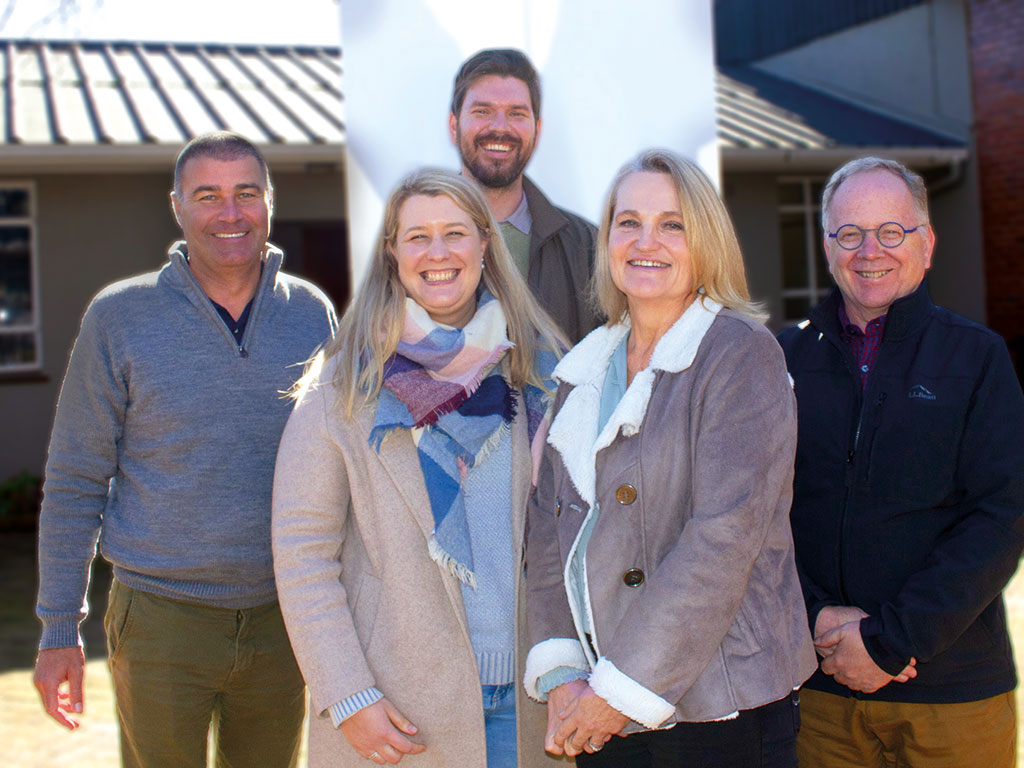
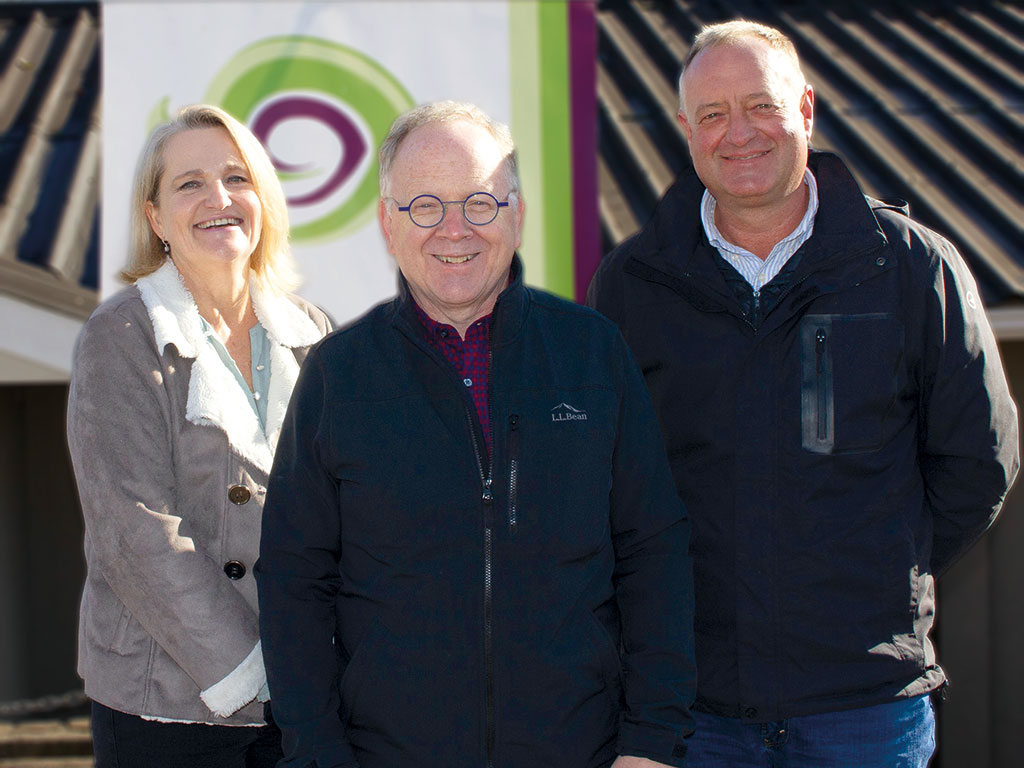
Recently, McLeod, her collaborators, Carel Cronjé, Prof. Mark Mazzola, and Dorfling joined growers for apple replant disease seminars in Grabouw and Ceres. The events were co-hosted by Hortgro and SU and chaired by Dr Minette Karsten, Crop Production Research Programme Manager at Hortgro Science.
While the programme included a panel discussion and a presentation by Mazzola on apple mycorrhizal fungi, this article focuses on alternative approaches to replant disease management.
Results from Washington State
“We conducted extensive work over 25 years to try and develop alternatives to soil fumigation,” said Mazzola, a plant pathologist affiliated with the United States Department of Agriculture in Washington State, as well as the Department of Plant Pathology at SU.
The first treatment he discussed was brassica seed meal amendments. Seed meals are the byproducts of oil extraction from oilseeds such as canola and mustard. After incorporation into the soil, some seed meals can alter the soil ecosystem, quash plant pathogens and foster a disease-suppressive microbial community.
Although brassica seed meal amendments can produce comparable or better results than fumigation with 1,3-dichloropropene and chloropicrin, the process requires specific seed meals that aren’t readily available in SA.
The second treatment, anaerobic soil disinfestation, can theoretically be applied anywhere and produced results equivalent to those of either soil fumigation or seed meal amendment in Mazzola’s trials at three replant sites. It involves incorporating a carbon source (plant material) into the soil, saturating the soil with water to displace oxygen, and covering the surface with plastic for several weeks to maintain the anaerobic environment.
“This is not a new process,” said Mazzola. “It has been employed for decades in other systems, such as strawberry production in California.”
Carbon sources can be grown in place or bought in. Mazzola’s team found that anaerobic soil disinfestation works best when carbon sources have a 15:1 to 30:1 carbon-to-nitrogen ratio, are chopped into small pieces, and are left in place for at least four weeks after being covered with plastic.
Profs McLeod and Mazzola, and Carel Cronjé. Credit: Alisa Farr
Scenarios for anaerobic soil disinfestation
McLeod enlisted Cronjé to connect the laboratory with the real world by testing the application of various anaerobic soil-disinfestation strategies in the field. Cronjé manages Dutoit Agri’s Paardekloof estate in the Witzenberg Valley.
Cronjé talked the seminar audience through three soil-disinfestation scenarios for winter-rainfall regions. In the first, an orchard is grubbed in May of year one. A cover crop is sown in early summer and incorporated for anaerobic soil disinfestation two months after sowing (in January of year two). The site will be ready to replant in September of year two.
In the second scenario, which is less frenetic, an orchard is grubbed in May of year one and the cover crop is only sown in the autumn of year two. It is incorporated for anaerobic soil disinfestation four months after sowing (spring of year two), and the orchard can be replanted in September of year three.
The benefit of the second scenario is that the winter-growing cover crops don’t require irrigation, so irrigation installation can wait until after anaerobic soil disinfestation.
Lastly, Cronjé presented a scenario using externally sourced organic material. Here, an orchard is grubbed in May of year one, the organic material is brought in and incorporated in December, and the site is ready to replant in September of year two.
In scenario three, the irrigation system must be installed before anaerobic soil disinfestation, to supply soil moisture once the carbon source has been incorporated. Where orchards have high ridges, scenario three may be the only option, unless growers can produce the organic material on adjacent fallow ground.
Cronjé estimates that scenarios one and two would cost roughly R18 500 per hectare, scenario three about R45 000 per hectare (depending on the type of organic material and the distance to its source), and soil fumigation about R55 000 per hectare.
“Of course, we all know that it costs around a million rand per hectare to establish an orchard,” he said. “We can’t take chances with apple replant disease and compromise our ability to get into production as fast as possible.”
Semi-selectives, organic amendments, and rootstocks
Soil treatment, no matter how effective, is not a guarantee against apple replant disease, because surveys have found replant pathogens on nursery trees. This risk motivated McLeod to investigate the use of semi-selective chemicals and organic soil amendments against apple replant disease.
In trials spanning 2013-22, she experimented with various combinations of anti-oomycete chemicals (mefenoxam and phosphonates), nematicides (fenamiphos and fluopyram), and compost and mulch. Fluopyram also has antifungal properties. The trials were conducted in commercial orchards established on replanted sites.
Although a combination of semi-selectives and organic amendments may be as effective as fumigation, more research is needed. “Replant disease is caused by a diverse group of organisms, which differ on different sites,” said McLeod.
“This makes it difficult to make recommendations based on limited data.”
The ideal solution for apple replant disease would be resistant rootstocks. Unfortunately, neither Mazzola nor Dorfling had good news for growers.
“When the Geneva rootstocks were emerging within the industry, there was a notion that they were resistant,” said Mazzola. “I think by now most of us are aware that resistance is not operating when Geneva rootstocks are more productive on apple replant disease sites.”
He explained that functional resistance is a specific phenomenon in which a rootstock cannot be infected by a particular pathogen. When Geneva rootstocks perform better at replant sites, this may be due to several factors, including tolerance. Tolerant rootstocks can maintain their performance despite infection.
“Predicting field-level tolerance requires on-site evaluation,” cautioned Mazzola. “Growers might want to do small trials in their own soils before selecting a rootstock.”
Dorfling has been screening rootstocks locally, with similar results. “I know you were hoping I would say that there’s a rootstock that will solve all your problems, but it’s unlikely that there will be a one-size-fits-all rootstock,” he said. “Realistically, growers work in a very complex space, with many replant agents that are not even consistent within a site, never mind across sites.”
So, where does this leave growers? For now, standard soil fumigation remains the safe option, but anaerobic soil disinfestation is emerging as a promising alternative. McLeod and Cronjé are testing various ways of optimising the method as part of ongoing Hortgro-funded research, and Cronjé is bullish about its potential.
“There is still a lot to learn,” he said. “But from what I’ve seen, I’m sure we can do it successfully.”
Watch the ARD Seminar presentations on our YouTube channel
We use cookies on our website to give you the most relevant experience by remembering your preferences and repeat visits. By clicking “Accept All”, you consent to the use of ALL the cookies. However, you may visit "Cookie Settings" to provide a controlled consent.
This website uses cookies to improve your experience while you navigate through the website. Out of these, the cookies that are categorized as necessary are stored on your browser as they are essential for the working of basic functionalities of the website. We also use third-party cookies that help us analyze and understand how you use this website. These cookies will be stored in your browser only with your consent. You also have the option to opt-out of these cookies. But opting out of some of these cookies may affect your browsing experience.
Necessary cookies are absolutely essential for the website to function properly. These cookies ensure basic functionalities and security features of the website, anonymously.
Cookie
Duration
Description
cookielawinfo-checkbox-analytics
11 months
This cookie is set by GDPR Cookie Consent plugin. The cookie is used to store the user consent for the cookies in the category "Analytics".
cookielawinfo-checkbox-functional
11 months
The cookie is set by GDPR cookie consent to record the user consent for the cookies in the category "Functional".
cookielawinfo-checkbox-necessary
11 months
This cookie is set by GDPR Cookie Consent plugin. The cookies is used to store the user consent for the cookies in the category "Necessary".
cookielawinfo-checkbox-others
11 months
This cookie is set by GDPR Cookie Consent plugin. The cookie is used to store the user consent for the cookies in the category "Other.
cookielawinfo-checkbox-performance
11 months
This cookie is set by GDPR Cookie Consent plugin. The cookie is used to store the user consent for the cookies in the category "Performance".
viewed_cookie_policy
11 months
The cookie is set by the GDPR Cookie Consent plugin and is used to store whether or not user has consented to the use of cookies. It does not store any personal data.
Functional cookies help to perform certain functionalities like sharing the content of the website on social media platforms, collect feedbacks, and other third-party features.
Performance cookies are used to understand and analyze the key performance indexes of the website which helps in delivering a better user experience for the visitors.
Analytical cookies are used to understand how visitors interact with the website. These cookies help provide information on metrics the number of visitors, bounce rate, traffic source, etc.
Advertisement cookies are used to provide visitors with relevant ads and marketing campaigns. These cookies track visitors across websites and collect information to provide customized ads.