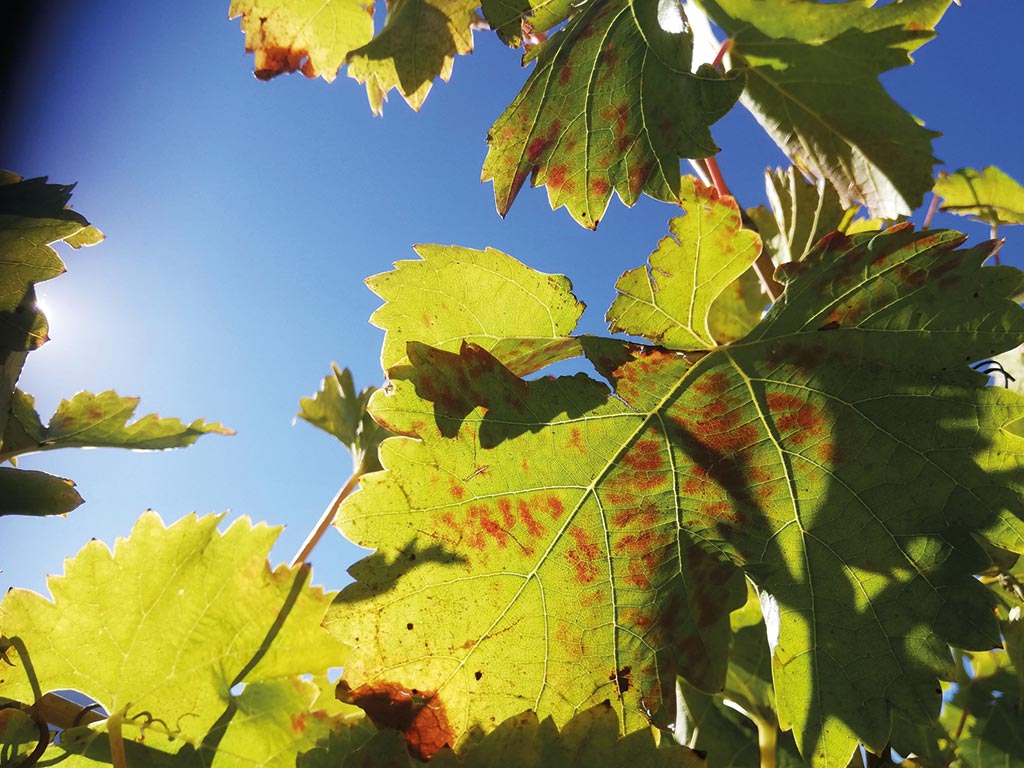
The hidden cause of poor colour
Grapevine leafroll-associated viruses are costing growers by reducing fruit colour and quality. What are the latest results from SATI-funded research on this problem? By Anna Mouton
Plant virologist Prof. Gerhard Pietersen wants table-grape growers to visit a Crimson Seedless block that shows exceptional colour development. “Every berry is dark red,” he says. “And they ripen evenly, so the grower can almost pick everything in one go.”
The secret of these vines’ success is that they’re free of Grapevine leafroll-associated viruses (GLRaVs). “In leafroll-infected Crimson Seedless, the colour development is uneven within bunches and vines, and across the vineyard,” explains Pietersen. “Eventually, vines reach a stage where the fruit doesn’t colour at all.”
“Eventually, vines reach a stage where the fruit doesn’t colour at all.”
Pietersen, the Research Director at Patho Solutions, a specialist plant-pathology practice, has been leading SATI-funded research into GLRaVs for nearly a decade. He believes that better leafroll control would benefit table-grape growers by extending the productive life of vineyards and improving fruit colour and quality.
How big is the GLRaV problem?
Grapevine leafroll disease is considered the most important viral disease of wine grapes worldwide. SA is no exception, but Pietersen argues that we underestimate leafroll’s impact on our table-grape industry.
“Leafroll isn’t as visible in table grapes as it is in wine grapes,” he says. “In the wine industry, you can see the leaves in infected blocks turn red. You seldom see this in table grapes, because the vines are more heavily fertilised and irrigated.”
In wine grapes, GLRaV infection is associated with uneven ripening and delayed or poor colour and sugar development. South African research has also shown that leafroll disease influences the sensory attributes of wine grapes – experts can detect differences in wines made from GLRaV-infected and non- infected vines.
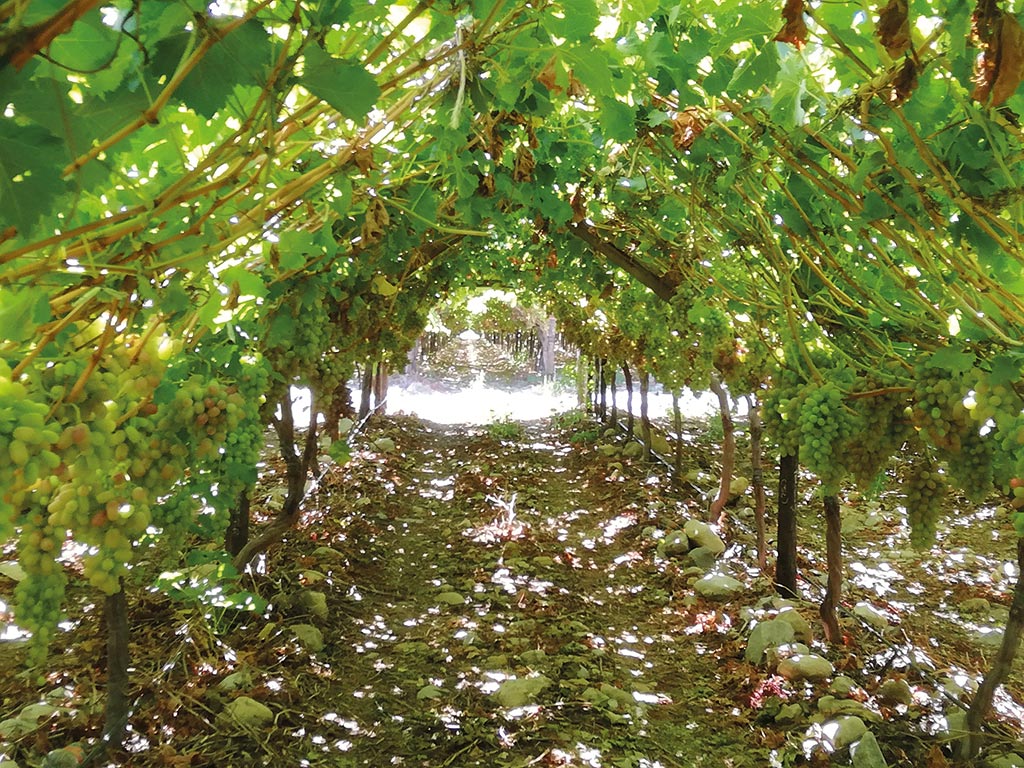
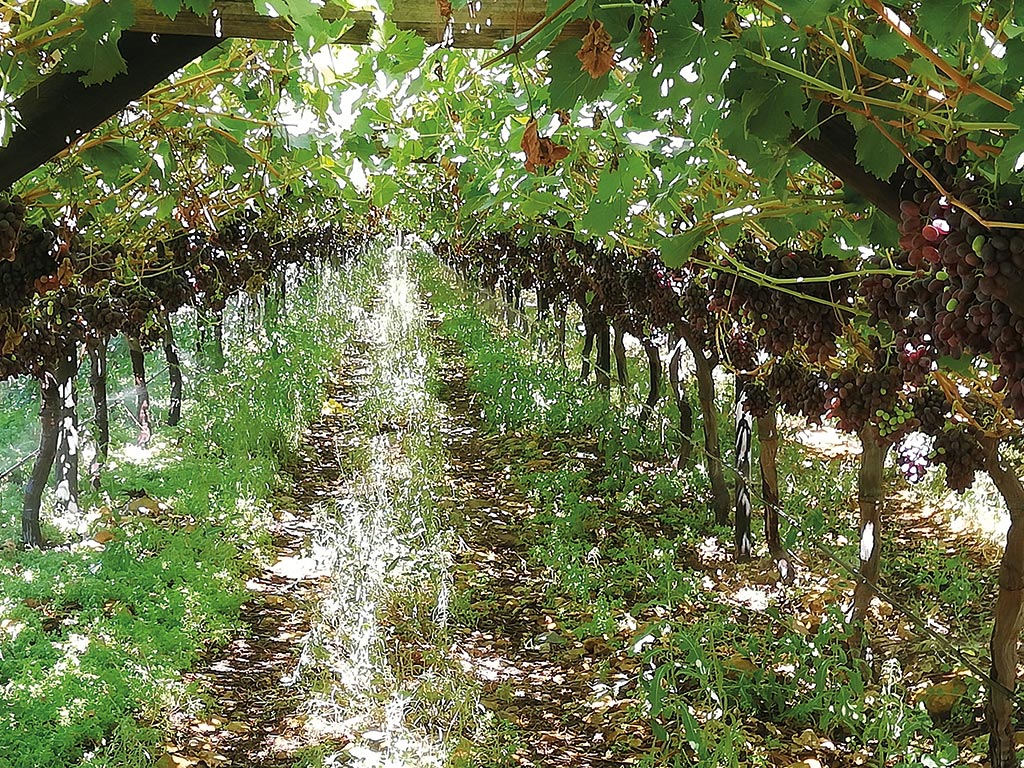
We know that leafroll has similar effects in Crimson Seedless, thanks to a SATI-funded project that flowed from table-grape growers’ challenges with poor colour development in this cultivar.
To investigate the problem, Pietersen tracked seven Crimson Seedless blocks for three years, confirming GLRaV as the cause. Although this research hasn’t been done on other table-grape cultivars, Pietersen thinks that some of them will be similarly affected by GLRaV.
Regrettably, leafroll is nearly ubiquitous in the table-grape industry, as Pietersen found during a 2017-2020 SATI-funded survey. His team tested 145 vines from 25 vineyards representing all the main growing regions and detected GLRaV in all vineyards in this study.
Best practices for leafroll management
There is no simple solution for leafroll. Growers must mitigate their risk by adopting a range of practices, including planting certified vines, controlling mealy bugs, and removing infected vines.
“I think the table-grape industry will get greater returns on healthy plant material and leafroll control than the wine-grape industry,” says Pietersen. “And they will achieve it more readily, because they are already so invested in mealy bug management.”
Starting with certified plant material is critical. All three types of GLRaV that occur in South African vineyards are spread by infected plant material – type 2 is exclusively spread this way. By planting vines propagated from nucleus material that has undergone virus elimination, growers can avoid type 2 altogether. Types 1 and 3 are also spread by mealy bugs and scale insects. While a block established with clean plant material may still become infected by invading mealy bugs, this is no reason to introduce leafroll viruses through planting infected vines.

As Pietersen points out, if a vineyard is established with infected material, those plants usually end up randomly distributed throughout the block. Each infected plant is a potential source of virus-vectoring mealy bugs that transmit leafroll to adjacent vines.
Pietersen has tracked the spread of leafroll in vineyards, showing that the number of infected vines can double annually when mealy bugs are not controlled. “If you start with 5% infected vines and do nothing, you will have 100% infection within six years,” he cautions.
Table-grape growers probably don’t need another reason to exterminate mealy bugs on bearing vines. Still, these data serve as a reminder that mealy bug control is equally important in new plantings.
Furthermore, mealy bugs are carried by ants, so ant control is an essential part of mealy bug management. Additionally, mealy bugs will hitch a ride on workers and equipment. If a farm has known leafroll-infected blocks, workers should not move from these blocks straight into young, uninfected blocks.
Removal of infected vines is practised in the wine industry, but identifying such vines in table grapes, particularly white cultivars, is difficult. “Most cultivars won’t show leafroll symptoms,” says Pietersen. “You will have to test the vines.”
The need for better tests
In the SATI-funded survey mentioned above, type 3 was the most common leafroll virus, infecting nearly 80% of the table-grape vines. Type 1 is relatively rare and usually found as a co-infection with another type. Type 2, which is not spread by insects, occurred in about a third of the vines, often together with type 3.
“Type 2 no longer occurs in the wine industry,” says Pietersen. “The wine industry has had a vine certification scheme since 1976. In this scheme, the nucleus plants from which all other plants are made must go through virus elimination.”
The table-grape industry moved from the plant certification scheme for deciduous fruit to the scheme for grapevines in 2017. However, according to Pietersen, a lack of reliable tests still holds back the production of clean plant material.
“We want plant material within the scheme to be free of GLRaV,” he says. “So, the most important thing is to have a test that can detect all three types.”
He explains that PCR (polymerase chain reaction) is suitable for testing nucleus plants because the numbers are small. For foundation or mother blocks containing hundreds or thousands of plants, PCR is too expensive, and there isn’t sufficient capacity within the fruit industry to process the necessary sample numbers.
Therefore, the scheme relies on the ELISA (enzyme-linked immunosorbent assay) to screen large sample sizes cost-effectively. But there’s a catch – the current ELISA doesn’t detect all three GLRaV types.
An ELISA for South African vines
An ELISA for all three GLRaV types used to be commercially available, but by 2025, the only local, affordable ELISA did not test for types 1 and 2. Consequently, Pietersen developed an ELISA for type 1 that could be combined with type 3.
He is currently working on an ELISA for type 2. The ELISA research has been co-funded by SATI, South Africa Wine, and Raisins South Africa.
“We know that type 2 is still present in the table-grape industry, so we must be able to test nucleus plants,” says Pietersen. “Once type 2 has been eliminated, like in the wine industry, there won’t be the same need for testing.”
The leafroll ELISA detects GLRaV by deploying highly specific antibodies that bind to the protein shells of virus particles. Each type of GLRaV contains subtypes called races. In the case of types 1 and 3, the races share similar protein shells, facilitating the development of antibodies against them.
Type 2, on the other hand, presents difficulties, as its races have different protein shells. Antibodies against one type-2 race don’t necessarily bind to the proteins of other races.
“We can now see that the ELISA kits from abroad are race-specific,” comments Pietersen. “They don’t pick up all the type-2 leafroll viruses.”
So far, his team has analysed the protein coats of six type-2 races to identify potential antibody targets common to all of them. They then generated antibodies against these targets but were unable to detect infected plants with them.
Currently, Pietersen is investigating a modified sample preparation technique that could promote antibody binding to virus proteins. Should this fail, the next avenue of research would be changing the protocol for making antibodies.
The role of rootstocks
Leafroll viruses can move between the rootstock and the scion of a grapevine. Therefore, establishing healthy vineyards requires that both the rootstock and the scion of young vines originate from clean plant material.
While a clean start is sufficient for excluding GLRaV type 2, it doesn’t guarantee freedom from types 1 and 3. “You can’t rely on virus elimination, because even though the plant is healthy, it remains susceptible,” says Pietersen. “As soon as you plant it outside where there are mealy bugs, it can become infected.”
Mealy bug control is a cornerstone of leafroll containment. But given the shrinking arsenal of products to manage mealy bugs, growers need other weapons against leafroll. Hence, Pietersen is exploring leafroll resistance in rootstocks.
“You can often find vines where the scion shows severe leafroll symptoms but suckers from the rootstock test negative,” he relates. In the past, people interpreted this to mean that rootstocks couldn’t be tested for GLRaV.
“You can often find vines where the scion shows severe leafroll symptoms but suckers from the rootstock test negative.”
However, by using PCR and other molecular tests, as well as grafting susceptible scions onto the rootstocks, Pietersen’s team proved that the rootstocks were truly negative. “We now know that some rootstocks have resistance,” he says.
His results led to a project jointly funded by SATI, South Africa Wine, and Raisins South Africa, aimed at selecting GLRaV-resistant rootstocks for these industries.
Leafroll-resistant Ramsey clones
Pietersen initially focused on Ramsey, as it is by far the most popular grapevine rootstock in SA. “But Ramsey is not the only rootstock in which some individuals have resistance,” he notes. “Most rootstocks have that characteristic.”
To identify resistant individuals, Pietersen needed Ramsey suckers. In the first year of the project (2022), he monitored more than 1 000 leafroll-infected table-grape vineyards during the growing season, hoping to collect suckers.
After failing to find any, he approached growers for assistance and located several potential sources of suckers in the second year of the project. These included leafroll-infected vineyards scheduled for removal, where the growers allowed Pietersen to cut vines down, thereby stimulating shoots from the rootstock.
One grower even lifted some of the rootstocks so that Pietersen could transplant them to a new site, providing a source of shoots.
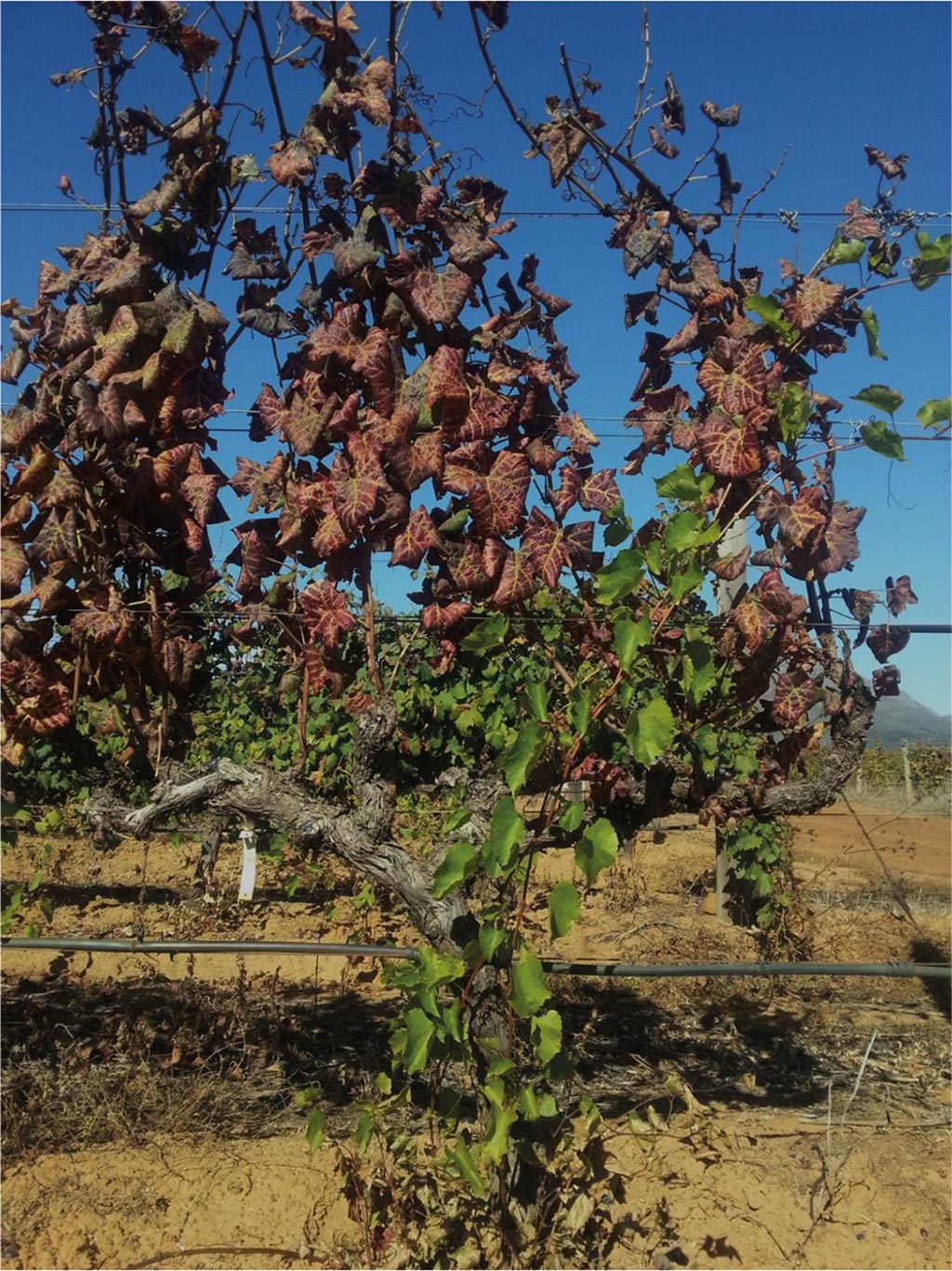
With help from Bosman Adama’s viticulturists, apparently resistant Ramsey rootstocks from five sources were established in pots by 2024. The material originated from vines where the scion had leafroll symptoms and tested positive for GLRaV type 3, but the rootstock sucker tested negative.
These five selections were kept in insect-free greenhouses and subjected to further ELISA and PCR tests. They were also inoculated with a susceptible scion, which was monitored for leafroll symptoms and tested with PCR. Of the original five, two showed promise of immunity.
Pietersen then went the extra mile, exposing the rootstocks to each of five different races of GLRaV type 3. Unfortunately, three of the races were able to infect the rootstocks, and two were also transmitted from the infected rootstocks to the scions.
“It looks like we don’t have rootstock immunity,” he says. “Instead, we have race-specific resistance. So, the rootstock will be resistant to some GLRaV type-3 races but not others.” The resistant Ramsey selections from this project are undergoing heat treatment to eliminate viruses and will be registered as new clones. Despite not being immune to leafroll, these clones will at least be less susceptible than standard clones.
Pietersen’s long-term vision is to identify the genetic basis for leafroll resistance in Ramsey. “This would be the first indication of leafroll resistance in the world,” he says. “And if we know which genes are involved, we can breed for those genes.”

A detailed discussion of leafroll control in this SATI video featuring Prof. Gerhard Pietersen: “Bestuur van rolblaarvirus in tafeldruiwe”.

Read more on biological control of mealy bugs in the 2025 Q4 issue of SATI’s Beyond the Bunch newsletter.

This SAFJ article from the April | May 2024 issue summarises Prof. Gerhard Pietersen’s leafroll presentation at the International Table-Grape Symposium: “Why table-grape growers should care about leafroll”.
Related Posts

Overhead plastics
Water scarcity and other adverse environmental conditions pose significant challenges for sustainable table-grape cultivation.

Overhead nets and plastic in SA table-grape production systems
SATI is funding three plastics projects aimed at responding to critical questions posed by growers.